
Why Petrol Price Cuts Are So Small in Pakistan Prices change daily in Pakistan, so all figures below are as of the October 13, 2026 notification. What the Senate Committee Asked on Oct 12 The Senate Standing Committee on Petroleum met on Monday, October 12, 2026, and questioned why petroleum prices are reduced by only…
Why Petrol Price Cuts Are So Small in Pakistan
Prices change daily in Pakistan, so all figures below are as of the October 13, 2026 notification.

What the Senate Committee Asked on Oct 12
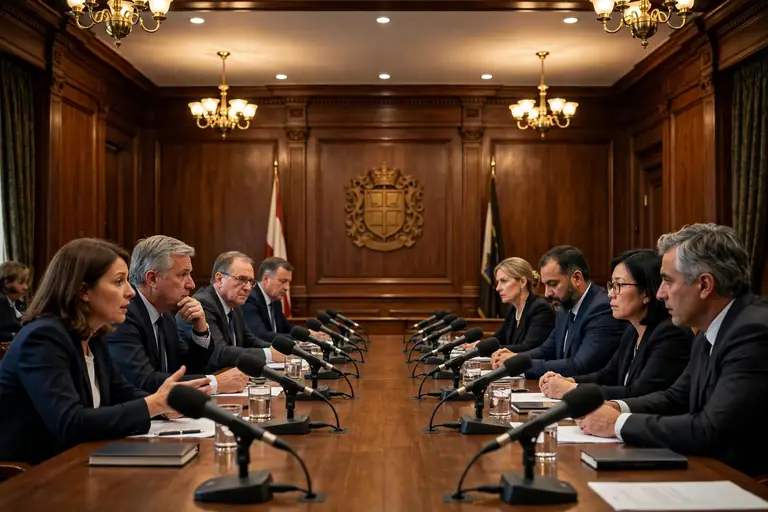
The Senate Standing Committee on Petroleum met on Monday, October 12, 2026, and questioned why petroleum prices are reduced by only a few paise despite arriving consignments and sufficient stocks (press-reported, Business Recorder, Oct 13, 2026: “Panel concerned over nominal petrol price cuts”).
Committee chairman Manzoor Kakar was blunt: when prices rise, they rise by around Rs5 per day, but when they fall, the relief is only about 75 paisas (press-reported, UrduPoint, Oct 12, 2026: “Manzoor Kakar questions daily petroleum price hikes”). The committee wanted to know what mechanics make the downward moves so tiny.
An OGRA Member Finance official told the committee the pricing basis is a rolling 7-day average of cargoes under the Arab Gulf Platts benchmark, with marine losses and customs duty included (press-reported, UrduPoint, Oct 12, 2026). That single sentence is the key to most of the answer — and the numbers below fill in the rest.
Why Petrol Price Cuts Are Small in Pakistan: Paisas, Not Rupees
Three plain reasons explain why petrol price cuts are small in Pakistan. None of them is a formula walkthrough — they are the plain arithmetic behind the daily notification.
1. The 7-day average smooths every move
OGRA sets daily ex-depot prices off a rolling 7-day average of cargo assessments (press-reported, UrduPoint, Oct 12, 2026). A sharp one-day fall in the Platts benchmark therefore feeds into the pump price at only a fraction of its strength each day, and the other six days in the window dilute it further. The same mechanism also cushions sudden spikes — but since the public notices hikes more than it notices the cushioning, the smoothing feels one-sided.
2. Rs85 of every litre is fixed levies that never move
The official Oct 13 price buildup (official, via Business Recorder e-paper, Oct 13, 2026) shows how little of the retail price actually responds to global oil:
| Component (per litre) | Petrol | High-speed diesel |
|---|---|---|
| Import cost | Rs284.59 | Rs289.29 |
| Petroleum levy | Rs80.00 | Rs80.00 |
| Climate Support Levy | Rs5.00 | Rs5.00 |
| Dealer margin | Rs9.98 | Rs9.98 |
| OMC margin | Rs7.87 | Rs7.87 |
| IFEM | Rs7.93 | Rs4.71 |
| Retail price | Rs395.37 | Rs396.85 |
The levies and margins were unchanged in the Oct 13 buildup — so on petrol, Rs110.78 of the Rs395.37 price (about 28%) is immobile. It does not rise or fall with international cargo prices. Only the import-cost component — roughly 72% of the retail price — moves with the market.
That makes Rs85 per litre a floor: even if international prices halved, the Rs80 petroleum levy plus the Rs5 Climate Support Levy would still be collected in full on every litre.
3. Base-price arithmetic: small percentages become paisas
When 72% of the price is the only part that moves, a small percentage change in the benchmark lands as a few paisas at the pump. Take the official figures: a 1% move in the import-cost component is about Rs2.85 — and because Rs110.78 of fixed levies and margins sits on top, that Rs2.85 shows up at the pump as roughly 0.72% of the retail price. International prices typically move in small daily percentages under the 7-day averaging window, so the resulting retail changes arrive as paisas.
Put together: the averaging dilutes each day’s move, the Rs85 levies never move at all, and the import-cost share is only about seven-tenths of the bill. That is the mechanical answer the committee was asking for.
What Changed on Oct 13: The Latest Notification
Daily pricing has applied since July 17, 2026, with OGRA issuing daily ex-depot prices and Friday prices holding over Saturday and Sunday (press-reported, Geo News, Oct 13, 2026).
The October 13, 2026 notification (press-reported, multiple outlets) set:
- Petrol: Rs395.37/L — down Rs2.93 from Rs398.30 (Oct 10–12)
- High-speed diesel: Rs396.85/L — up Re0.61 from Rs396.24 (Oct 10–12)
For context, the Oct 10–12 prices were petrol Rs398.30 (−Re0.66) and diesel Rs396.24 (+Re0.52). So the Oct 13 cut of Rs2.93 arrived a day after the committee’s Oct 12 session — the largest single-day petrol cut in this pricing cycle, though still driven entirely by the import-cost component, with levies and margins untouched.
For the full daily-price history and today’s board prices, see our petrol price today Pakistan page.
Where the Fuel Subsidy Fits In
The pump price above is what everyone pays — the subsidy works separately. Under the PM Fuel Relief Scheme, eligible beneficiaries get Rs100 per litre relief through the 9771 SMS system (see our PM Fuel Relief Scheme 2026 complete guide and the Rs100 petrol subsidy explainer).
Press-reported scheme figures (Oct 12–13, 2026): about 10 million registered, around 9 million benefited, roughly 9,700 fuel stations facilitating the scheme, and Rs9 billion released under it so far. If you use tokens, the 9771 token guide explains how REG and TOK messages work, and the 9771 weekly token page covers the weekly token mechanics.
The scheme’s future has also been in the news — read will the petrol relief scheme end? and our every scheme explained overview for the full picture.
What to Watch Next
- Daily notifications: every evening’s OGRA ex-depot price shows whether the import-cost component keeps falling.
- The levies: the Rs80 petroleum levy and Rs5 Climate Support Levy are the fixed floor — any change there would move the pump price rupee-for-rupee.
- The committee’s follow-up: the panel’s Oct 12 questions put OGRA’s averaging mechanics on the public record; further sessions may demand a written breakdown.
Frequently Asked Questions
Why petrol price cuts are small in Pakistan?
Because only about 72% of the retail price — the import-cost component — moves with international prices. Rs85 per litre of fixed levies (Rs80 petroleum levy + Rs5 Climate Support Levy) never move, margins are fixed, and the rolling 7-day Platts average dilutes each day’s market move. Small percentage changes on that base arrive as paisas at the pump.
How are petrol prices calculated daily in Pakistan?
OGRA issues daily ex-depot prices based on a rolling 7-day average of cargoes under the Arab Gulf Platts benchmark, including marine losses and customs duty (press-reported, UrduPoint, Oct 12, 2026). Friday’s price holds over Saturday and Sunday. Daily pricing has applied since July 17, 2026 (press-reported).
What did the Senate committee ask on October 12, 2026?
The Senate Standing Committee on Petroleum asked why petroleum prices are reduced by only a few paise despite arriving consignments and sufficient stocks (press-reported, Business Recorder, Oct 13, 2026). Chairman Manzoor Kakar said hikes reach about Rs5 per day while cuts come at only about 75 paisas (press-reported, UrduPoint, Oct 12, 2026). Coverage also appeared in Minute Mirror.
How much of the petrol price is tax?
Rs85 per litre: the Rs80 petroleum levy plus the Rs5 Climate Support Levy (official, via Business Recorder e-paper, Oct 13, 2026). Neither moved in the Oct 13 buildup.
Why did petrol fall Rs2.93 on Oct 13 but only paisas before?
The Rs2.93 cut came entirely from the import-cost component falling in the 7-day Platts average; levies and margins were unchanged (official, via Business Recorder e-paper, Oct 13, 2026). Daily market moves are usually small, so most days’ changes are paisa-sized — Oct 13 was simply a larger import-cost move.
Does the Rs100/L fuel subsidy make cuts bigger?
No — the subsidy is separate from the pump price. Everyone pays the notified price (Rs395.37/L petrol as of Oct 13), and eligible beneficiaries get Rs100 per litre relief through the 9771 system. See the PM Fuel Relief Scheme 2026 guide for how it works.
