9771 Petrol Subsidy Scam Alert: 5 Red Flags to Spot Fake Messages If you searched “is 9771 real or fake,” you’re asking exactly the right question. Pakistan’s fuel subsidy scheme has created a rush of interest — and scammers have rushed in right behind it. The government itself launched an anti-fraud campaign in mid-September 2026…
9771 Petrol Subsidy Scam Alert: 5 Red Flags to Spot Fake Messages
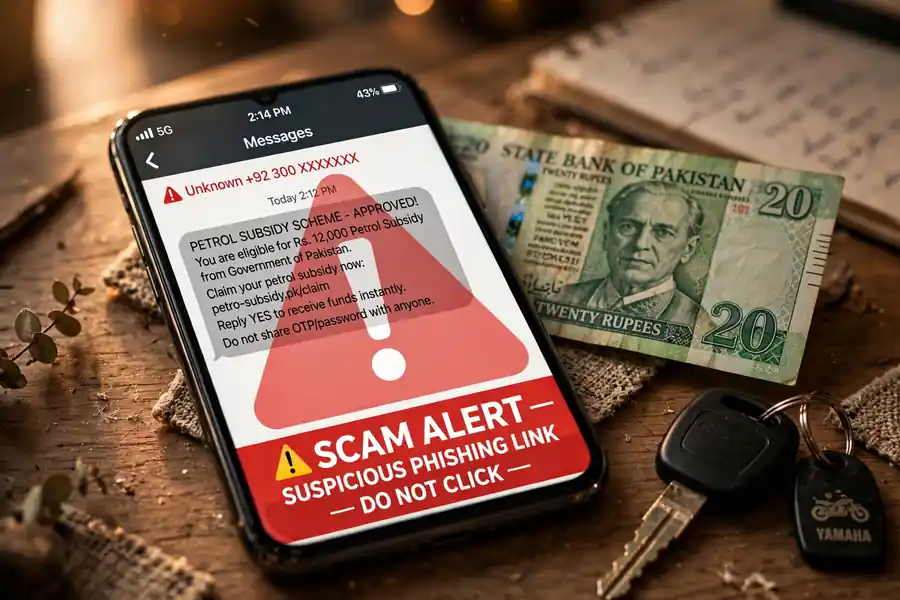
If you searched “is 9771 real or fake,” you’re asking exactly the right question. Pakistan’s fuel subsidy scheme has created a rush of interest — and scammers have rushed in right behind it. The government itself launched an anti-fraud campaign in mid-September 2026 after fraudsters started using the scheme to scam people (press-reported, ProPakistani, 14 Sept 2026).
The confusing part: 9771 is genuinely the official code. So “is 9771 real or fake?” has two answers — the code is real, but most unsolicited messages pretending to be from it are fake. This guide shows you how to tell the difference, with every fact labeled so you know what’s official, what’s press-reported, and what’s unverified.
Is 9771 real or fake?
9771 is real. It is the official shortcode of the federal PM Fuel Relief Scheme, which gives eligible beneficiaries Rs100 off per litre of petrol (official, via pmfuelrelief.pk and multiple credible outlets). Registration is free and happens by SMS to 9771 (official).
The confusion comes from a stale claim circulating online that “9771 is a confirmed scam” — that page is pre-announcement misinformation (aggregator, governmentschemes.pk). It predates the scheme’s actual launch and contradicts the official portal and press coverage. Disregard it.
At the same time, fake 9771 scam messages are genuinely widespread. The government launched an awareness campaign specifically against “fraudsters using the Prime Minister’s special cheap petrol relief scheme to scam people” through fake calls and messages offering registration, payments, or benefits (press-reported, ProPakistani, 14 Sept 2026). Warnings are still current: aggregator guides updated in October 2026 continue to flag fraud messages as an active problem (kwccimalir.org.pk, updated ~Oct 4, 2026).
Official vs fake 9771 messages
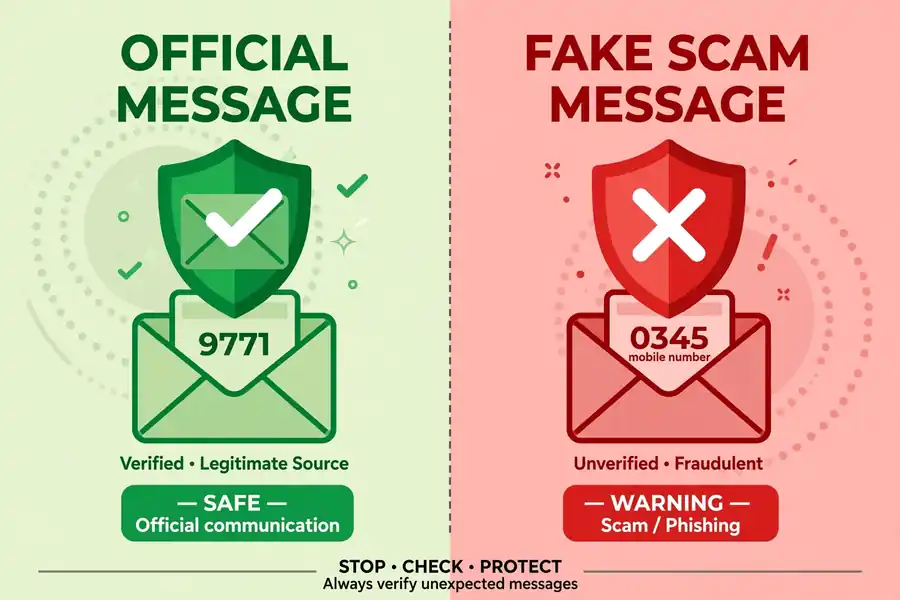
| Check | Official | Fake |
|---|---|---|
| Sender | The 9771 shortcode itself (official) | A personal mobile number (03XX), WhatsApp, or a call from a stranger (press-reported scam pattern, ProPakistani, 14 Sept 2026) |
| Fees | None — registration is free (press-reported, Business Recorder, ~Sept 20, 2026) | Asks you to pay for registration, tokens, or “information” (press-reported minister warning, Business Recorder, ~Sept 20, 2026) |
| Personal details | You send your own details to 9771 yourself (official) | Asks for your OTP, CNIC, or vehicle details (press-reported minister warning; aggregator guidance not to share OTPs with strangers, kwccimalir.org.pk, ~Oct 4, 2026) |
| Links | Only the official portal, pmfuelrelief.pk (official) | Unofficial links, WhatsApp groups, or “claim your subsidy” portals (aggregator scam-alert guidance, ograprices.com, updated ~Oct 9, 2026) |
| Promises | Rs100/litre relief through tokens (official) | Cash payouts or “claim Rs12,000 subsidy” style offers — benefits the scheme doesn’t pay out (scam pattern; the scheme pays fuel relief, not cash) |
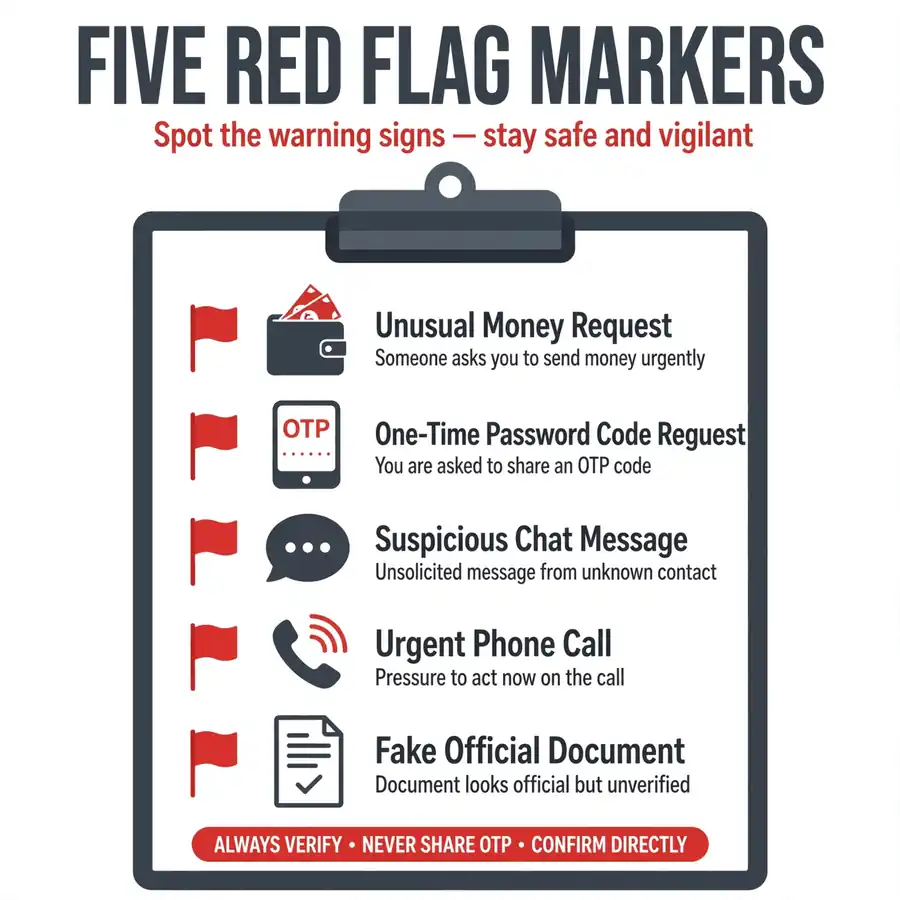
The 5 red flags of a 9771 petrol subsidy scam
1. It asks for money — any amount, for any reason. The minister’s warning was explicit: “No one should pay anyone for registration, tokens or information about the scheme” (press-reported, Business Recorder, ~Sept 20, 2026). Registration is free. Anyone charging a “registration fee,” “token fee,” or “agent fee” is running a scam.
2. It asks for your OTP, CNIC, or vehicle details. The minister advised citizens not to share CNIC numbers, vehicle registration details, or other personal information with unauthorised persons (press-reported, Business Recorder, ~Sept 20, 2026). Aggregator guidance adds: never share your OTP with strangers (kwccimalir.org.pk, updated ~Oct 4, 2026). An OTP is the key to your SIM and accounts — no official process collects it from you by call or message.
3. It comes from a personal number, WhatsApp, or an unofficial link. Official communication runs through the 9771 shortcode and the official portal pmfuelrelief.pk (official). Messages from personal 03XX numbers, WhatsApp forwards, or links to “claim portals” are the documented scam pattern (press-reported, ProPakistani, 14 Sept 2026; aggregator warning against unofficial WhatsApp links/portals, ograprices.com, ~Oct 9, 2026).
4. It promises cash or benefits the scheme doesn’t offer. The scheme provides Rs100/litre petrol relief via tokens — not cash transfers and not lump-sum “claim your Rs12,000 subsidy” payouts (official). Any message offering cash, bonuses, or extra benefits beyond fuel tokens is inventing benefits that don’t exist (analysis based on the official scheme mechanics).
5. It pressures you to act immediately. “Your subsidy expires today,” “reply YES now,” “share the code before it’s too late” — urgency and threats are classic fraud pressure tactics (general anti-scam guidance, not a reported fact about this scheme). Real government processes don’t expire your eligibility because you didn’t reply to a random message within an hour.
What to do if you get a scam message
- Do nothing the message asks. Don’t click the link, don’t reply, don’t call back, and don’t share any OTP, CNIC, or vehicle details (guidance consistent with the minister’s press-reported warning, Business Recorder, ~Sept 20, 2026).
- Verify through official channels only. Check your registration status by messaging 9771 yourself, or use the official portal pmfuelrelief.pk (official). If you were having genuine registration trouble instead, see our troubleshooting guides for 9771 SMS not working and 9771 SMS not received.
- Report it. Complaints can be lodged by calling 9771 (press-reported, PNI/nation.com.pk, 16 Sept 2026). For the full complaint process, see our fuel subsidy complaint guide.
- If you already paid or shared details: stop all contact with the scammer, never send more money, and report it on 9771. Whether lost money can be recovered is unverified — no official recovery process has been reported. Tell family members, especially older relatives, so the same message doesn’t catch them.
Frequently asked questions
Is 9771 real or fake? 9771 is real — it’s the official government shortcode for the PM Fuel Relief Scheme (official, pmfuelrelief.pk). But unsolicited calls and messages pretending to be about 9771 are frequently fake (press-reported, ProPakistani, 14 Sept 2026). The code is genuine; the scam messages are not.
Is 9771 petrol subsidy registration really free? Yes. The minister warned that “no one should pay anyone for registration, tokens or information about the scheme” (press-reported, Business Recorder, ~Sept 20, 2026). If someone is charging you, it’s a scam.
I received a message from 9771 asking for an OTP. Is it real? No. Official messages never ask you to share an OTP or pay fees (press-reported minister warning; aggregator guidance, kwccimalir.org.pk, ~Oct 4, 2026). Treat it as fraud — don’t respond.
Should I click a WhatsApp link to register for the subsidy? No. Registration happens by SMS to 9771, and the only official portal is pmfuelrelief.pk (official). Beware unofficial WhatsApp links and portals (aggregator scam-alert guidance, ograprices.com, updated ~Oct 9, 2026). Start with our step-by-step petrol subsidy registration guide instead.
What is the official website of the 9771 scheme? pmfuelrelief.pk (official). Anything else claiming to be the “official” registration site is unverified — check it against this domain.
I already paid a scammer. Can I get my money back? This is unverified — no official refund or recovery process for scam victims has been reported. Report the incident on 9771 (press-reported complaint channel, PNI/nation.com.pk, 16 Sept 2026), cut contact with the scammer, and warn others.
